Living with chronic obstructive pulmonary disease (COPD) can mean managing breathlessness, cough, medicines, and changes in symptoms over time. Digital care tools—such as video visits, online pulmonary rehabilitation, and devices that send health information to a care team—can make some parts of that work easier.
These tools are designed to support a treatment plan, not replace a clinician or provide emergency care. The right approach depends on a person’s symptoms, health needs, access to technology, and preferences.
What does digital COPD care include?
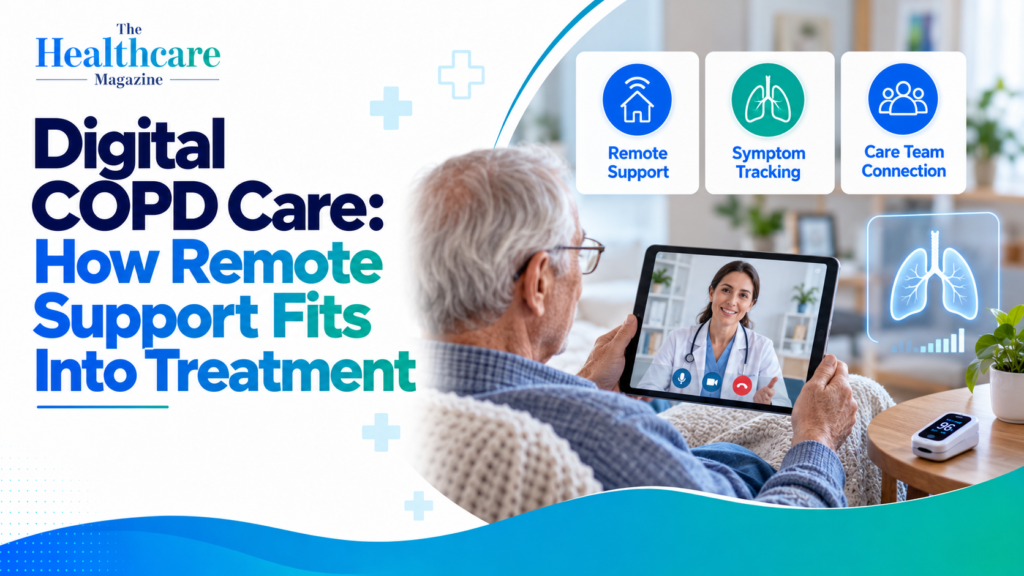
Digital COPD care can take several forms:
- Telehealth appointments: Video or phone visits with a healthcare professional.
- Remote patient monitoring: A connected medical device records health information and sends it to a care team.
- Online pulmonary rehabilitation: A program supervised by a healthcare professional, with some or all sessions provided by phone, computer, or app.
- Digital education and symptom tracking: Apps, websites, or patient portals that help people follow their care plan and share updates with clinicians.
These options are not the same. A video appointment is a conversation with a clinician; remote monitoring involves collecting and transmitting health information. A clinic may offer one service without offering the others.
How remote support can help
1. Check-ins without every trip to the clinic
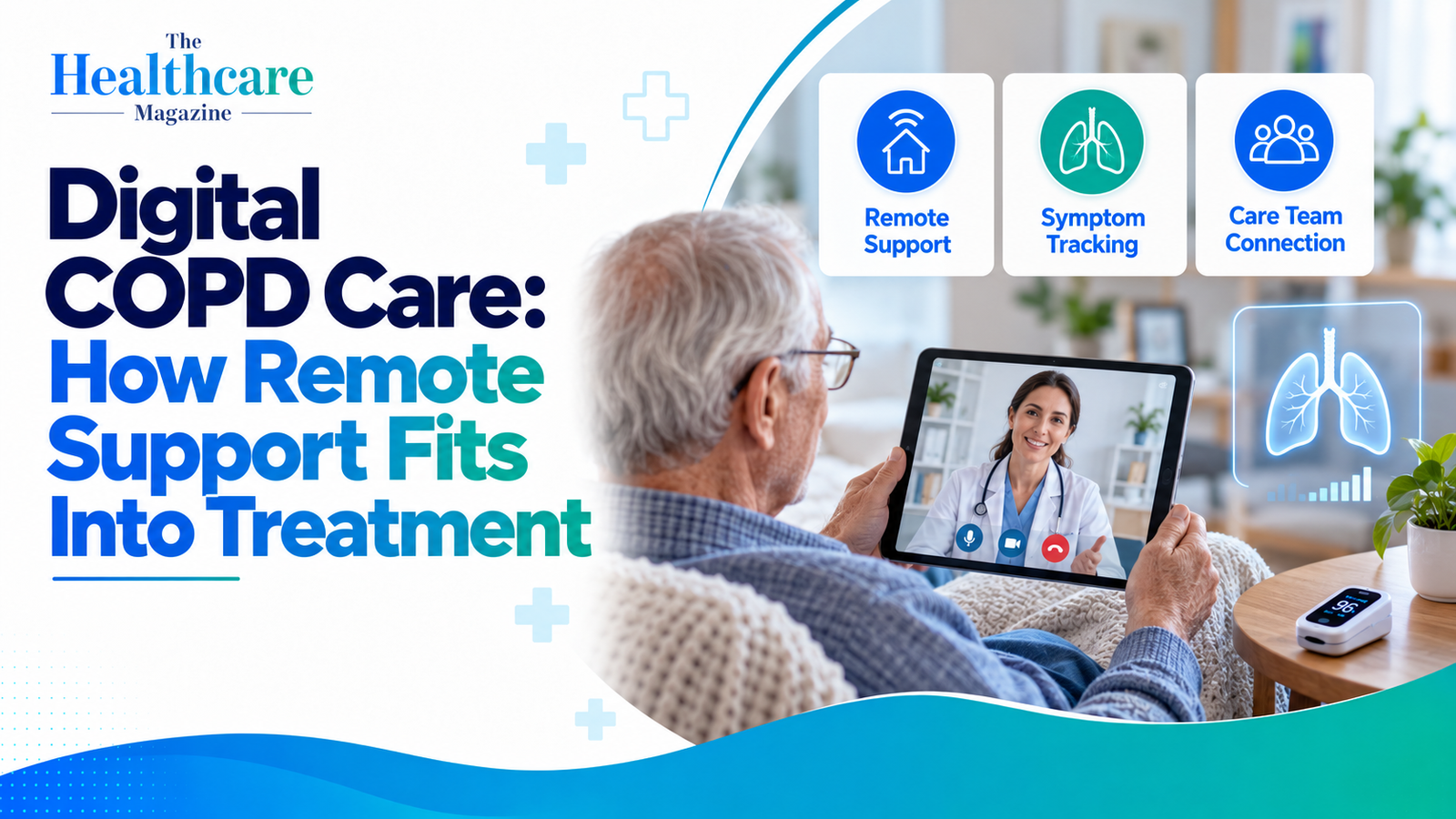
A telehealth appointment may help a person discuss symptoms, review medicines, ask questions, or follow up after a change in care. It can be especially useful when traveling is difficult or a clinic is far away. A clinician can decide whether a remote visit is enough or whether an in-person examination or test is needed.
Telehealth does not replace regular medical care. COPD requires ongoing assessment, and clinicians may need to examine a patient or perform tests in person.
2. Monitoring health information at home
With remote patient monitoring, a person may use a connected medical device to record information that is sent digitally to a healthcare provider. The clinician can then review the information as part of the patient’s care. The specific device and measurements should be chosen by the care team based on the person’s needs.
A pulse oximeter, for example, measures oxygen saturation. It may be recommended for some people, but its readings can be inaccurate or inconsistent. It should not be used on its own to decide whether a person is safe or needs medical care. Follow the clinician’s instructions and pay attention to symptoms, not just the number on a screen.
Remote monitoring is not a substitute for contacting a clinician when symptoms worsen. It also does not mean that someone is watching a patient’s readings at all times. Ask the care team how often information is reviewed, who responds to alerts, and what to do outside office hours.
3. Accessing pulmonary rehabilitation
Pulmonary rehabilitation is a supervised program that can include exercise training, breathing techniques, and education about managing lung disease. For people with COPD, a program may help build strength, improve activity, and support day-to-day symptom management. Some programs offer parts of rehabilitation through a phone, website, or mobile app, which may help people who have trouble reaching a center.
An online program should still provide appropriate guidance and support. Before exercising at home, ask your doctor which exercises you can safely do. If you use oxygen, ask how to use it during exercise. The right plan depends on your health and fitness level.
4. Making the action plan easier to follow
A COPD action plan tells you how to manage your usual symptoms, what to do if they get worse, and when to seek emergency help. It may list medicines, when to contact a healthcare professional, and when to seek emergency care. A digital version can make the plan easier to find, update, or share with a caregiver.
Apps and patient portals may also help someone keep track of symptoms, appointments, and questions. The information is most useful when it supports a plan made with a clinician. Do not start, stop, or change a medicine or oxygen setting based only on an app or device unless your healthcare professional has given you specific instructions. COPD medicines and oxygen needs should be managed according to the patient’s plan.
5. Reviewing medicines and inhaler technique
Inhalers deliver medicine to the lungs, but using one correctly can take practice. During a remote visit, a clinician may be able to review how a patient uses an inhaler by watching them demonstrate it on camera. The clinician can explain whether the technique looks right and whether further instruction or an in-person check is needed. The National Heart, Lung, and Blood Institute notes that many people have trouble with inhaler technique and encourages patients to ask their healthcare team for help.
A video call may also help patients prepare questions about medicines, side effects, or when to use a prescribed rescue inhaler. It should not be used to make medication changes without clinical guidance.
What digital care cannot do
A connected device or app cannot diagnose every cause of a breathing problem. A change in symptoms may need prompt medical attention, even if a home reading looks normal. Digital tools also vary in quality and purpose, and a consumer wellness app is not necessarily a medical device or a service monitored by a healthcare professional.
Privacy is another consideration. Ask what information is collected, who can see it, how it is stored, and whether caregivers or other clinicians can access it. If you have limited internet access, difficulty using a smartphone, or trouble seeing or hearing during video visits, tell the provider. They may be able to offer another way to stay connected.
When to contact a clinician or seek emergency care
A COPD flare-up can involve worsening symptoms. Ask your healthcare professional to help you create a plan that explains which symptom changes to watch for, what to do, and whom to contact. If your symptoms worsen, follow the plan and contact your care team.
If you have severe difficulty breathing, chest pain, or another medical emergency, get medical help immediately. Call 911 or go to an emergency department. Do not wait for a device alert or a scheduled telehealth appointment.
Questions to ask before enrolling
If a clinic offers digital COPD support, consider asking:
- What services are included: video visits, monitoring, pulmonary rehabilitation, or education?
- Which devices or apps would I use, and who reviews the information?
- How quickly does the care team respond to readings or messages?
- What should I do if symptoms worsen after hours?
- Is in-person care available if a remote visit is not enough?
- Will my insurance cover the service or equipment?
Medicare coverage depends on the service and eligibility requirements. For example, people with moderate to very severe COPD may qualify for pulmonary rehabilitation coverage under Medicare Part B. They must meet Medicare’s requirements to receive this benefit. Check with Medicare, your health plan, or the provider about coverage and costs before beginning.
A useful addition to a COPD care plan
People can use apps and online services to contact their care team, join rehabilitation sessions, and view instructions for managing their condition. Its role is strongest when the patient and clinician agree on what information to track, how it will be used, and what steps to take if symptoms change.
If you are interested in remote COPD support, ask your healthcare professional which options fit your treatment plan. A good program should make care easier to access while keeping clinical decisions and safety guidance connected to your healthcare team.