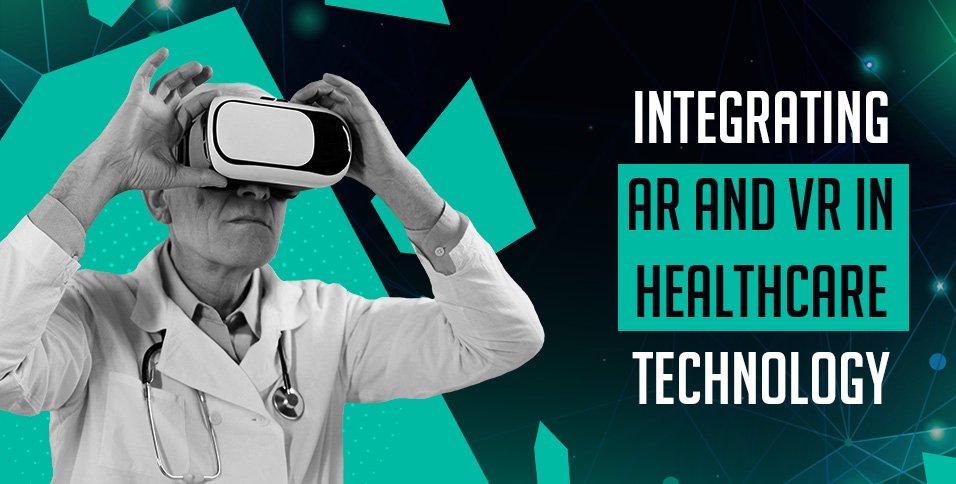
The change in time has brought a transformation in the healthcare industry where company are using augmented reality and virtual reality. AI is helping in modern healthcare system by enabling complete knowledge of medical events and by combining virtual data with real world surroundings. For example, AR can be used to superimpose information about patient’s condition making it easier for medical personnel to explain and diagnose their illness.
From surgical planning and improving patient care to supporting medical trainees, AI has wide medical uses. Through interactive visualizing tools, AR and VR is helpful to understand different medical issues. The flawless blending of physical and digital elements has power to rethink teaching models and to improve medical trainee knowledge retention.
AR/VR In Healthcare Technology:
AR/VR in the healthcare industry is improving. The companies are using medical equipment services to enhance their skills in a free environment. The upkeep of the medical equipment in healthcare facilities basically guarantee patient safety and operational efficiency.
According to one of the reports it has been stated that global equipment maintenance was valued at USD 41.90 billion in 2023 ad is projected to reach USD 81.32 billion by 2023 at CAGR of 10%. A comprehensive 3D model of an MRI machine can be created using VR which helps service engineers to disassemble and reassemble the parts without actually harming the equipment. The program usually offers real time feedback on trainee’s activities. Trainees are able to learn from their errors right away because of the immediate feedback which helps in reinforcing good practices and enhancing good skills.
Implement AR and VR offers different advantages such as accessibility and flexibility, enhanced skills, acquisition, safety and immersive learning experience. Through VR multinational medical equipment companies may educate their service personnel. VR and AR training modules are available remotely and in the training the service engineer can get hands on a ventilator over and over until he becomes professional in it.
Opportunities to expand the use of AR/VR in healthcare.
AR/VR ability to render virtual, collaborative spaces is under-utilized. As the technology improves there will be more opportunities to augment physical, in-person services and activities with different options. One of the major niche is of healthcare and telehealth, where it can offer personalized services to the patients who otherwise have to travel long distance to meet the necessary provider. To fully utilize AR/VR in healthcare it will require broadband access to more areas, especially to low-income communities.
Technological improvements will create more opportunities to use AR/VR devices. Brain-computer interface and eye-tracking technologies can help individuals with speech impairments to communicate in virtual spaces as well in their day to day lives. BCI-based inputs could help users with mobility impairments to navigate virtual environments without physical motion or controls. Wearable AR devices such as smart glasses or heads-up displays provide users with rich information about their surrounding through visual and auditory outputs. The information would be especially valuable to those users who can benefit from different assistive features such as real-time spatial captioning, machine vision guidance or even memory recall.
Limitations with AR/VR Tools:
With great opportunities often comes some limitations. These limitations to the immersive approaches and such kind of interventions could entrench stereotypes if not executed in proper manner. One study found that stereotype activation could outweigh the empathetic gains from an immersive perspective taking exercise, highlighting the main importance of considering potential consequences.
Immersive diversity trainings for workplaces also have limitations. Most of transformative programs are not substitute for dynamic changes but a valuable tool in shifting workplace culture for creating a more enabling environment for these changes to take place. For example, it is not clear whether these trainings will have more impact on deeply entrenched biases. There is also question of the ethics subjecting individuals to a traumatic experience even if only a simulation, particularly when that experience is mandated.
Conclusion
There has been great transformative potential of immersive technologies in XR, VR, AR in healthcare. To make use of health technology and to improve health around the world, there needs to be more changes made which can improve the healthcare area.
One of the major challenge lies in the influence of health literacy on patient- doctor relationship and healthcare access. One of the study states the latest development and challenges in the medical field. To fully achieve the results, it is important to use health technology in better manner. The road ahead is both exciting and hopeful and with new ideas we can bring great change in the age of healthcare which could be quite effective and accessible.
As these technologies continue to develop and gain widespread adoption, further opportunities will also arise which is critical for the world so that the potential is fully realized in the future.