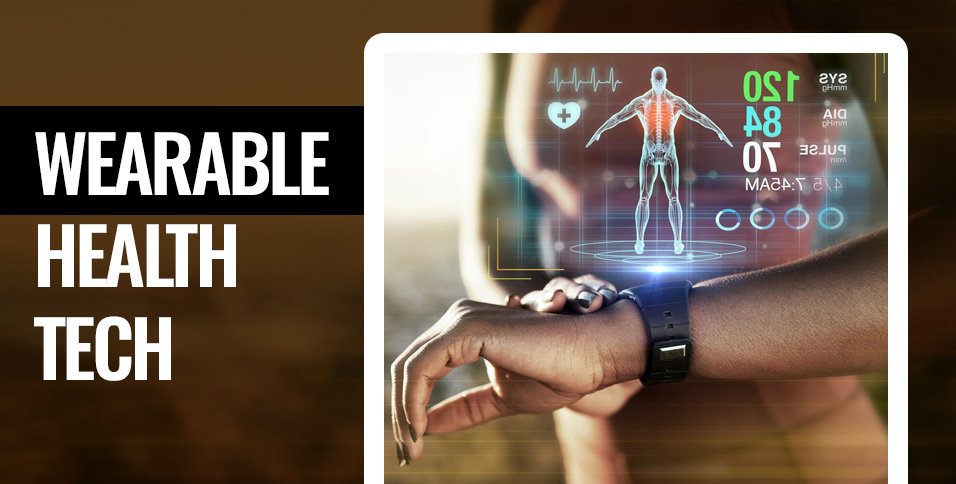
The integration of digital tools with different healthcare system is a great concept which has rapidly evolved from past decades. Wearable health technology and gadgets especially designed for fitness and wellness tracking help in monitoring health and providing personalized care. Some of wearables include wide range of devices such as smartwatches, fitness trackers and medical-grade wearable which are used to monitor heart rate, oxygen saturation and glucose levels.
Health tech devices have played an important role in both personal health management and clinical settings which early detection of heart abnormalities, chronic disease management and improved patient outcomes. The preventive health care helps to revolutionize both patient and preventive care becoming more integrated with artificial intelligence.
Evolution of Wearables: From Fitness Trackers to Medical Devices.
There is a significant transformation evolving from simple fitness trackers to sophisticated medical devices with the capacity for continuous health monitoring and real-time data analysis. Fitbit Flex and Withings Pulse basically focus on encouraging physical activity and are considered as one of the most user-friendly devices.
As technology began to improve there were more wearables designed to monitor glucose levels, oxygen saturation and heart rate. The advancements are helpful to diagnose certain chronic diseases such as cardiovascular conditions and diabetes and help to improve the patient outcomes.
The modern wearables are integrated with AI and machine learning helping to track the comprehensive monitoring in both personal health management and critical care with the potential to revolutionize the healthcare sector.
Advancement in wearable health technologies:
Some of the major advancement in the wearable health technologies are as follows:
- Smart Fabrics and Implantable Wearables: Smart textiles are designed to facilitate health management by embedding sensors with the fabric allowing monitoring of physiological parameters such as heart rate and temperature. Implantable wearables further push the boundaries of health monitoring helping in tracking health metrics such as glucose levels in diabetes or cardiac function in heart conditions.
- Advance in Biometrics and Sensors: Some recent advances include sensors and biometrics used to monitor physiological parameters such as heart rate, temperature and glucose levels. The sensor includes electrochemical, optical and mechanical mechanisms to improve critical health care data from body fluids like saliva and blood. Nanotechnology has also played an important role in development of advanced wearable sensors making them efficient.
- Integration of Wearables with AI and machine learning for predictive analytics: The health technology in wearable devices have improved due to integration of machine learning and artificial intelligence. Machine learning algorithms are used to enhance the accuracy and efficiency of wearable devices by analysing user health data. AI- powered wearables can track user behaviours such as sleep patterns and physical activity. As wearable technology continues to evolve, the integration of AI and MIL will remain cornerstone in preventive and personalized healthcare.
Future Landscape of Wearable Health Technology:
The future of wearable health technology includes immense potential making it more personalized and proactive. Advancement in sensors, biometrics, artificial intelligence and machine learning and enabling comprehensive health monitoring. The integration of AI and machine learning will enhance the predictive capabilities of the wearables helping real-time data analysis and detection of patterns which may indicate potential health issues.
The future of wearables is likely to see greater interoperability with other healthcare technologies such as telemedicine platforms, electronic health records and diagnostic tools. This seamless integration will help to enable more holistic approach for patient care helping to deliver personalized treatment plants. The future of wearables promises more connected, informed and health conscious society with individual empowered to take charged of their own health through real-time data and actionable insights.
Challenges for wearable health technology: Data Accuracy, Privacy and User Compliance.
Wearable health technology often has critical challenges particularly in area of data privacy, accuracy and user compliance. One of the most significant challenges is accuracy of data collected by wearable devices leading to incorrect health assessments. With the improved technology factors such as device placement, user movement and environment conditions it still impacts the accuracy of the data.
Privacy concern is one of the substantial barrier to adoption of wearable health technology, Current privacy regulations such as HIPAA in the U.S do not cover data collected by commercial wearable devices, leaving gaps in the protection. Solutions such as implementing stronger encryption protocols, different privacy techniques and user consent mechanisms are important to mitigate these risks.
User compliance is another challenge impacting the long term effectiveness of wearable devices. Ensuring user compliance requires development of more user friendly devices, enhancing battery life and integration wearables seamlessly into daily routines.
Conclusion
Wearable health technology has changed and from basic fitness trackers to advanced medical devices helping in early detection of diseases and personalized healthcare interventions. The new innovations include integration of AI. Smart fabrics and biosensors. However, challenges such as privacy, accuracy and data are also there. By overcoming the challenges, wearable technology can help to improve patient outcomes benefiting society through efficient healthcare solutions. Interdisciplinary collaboration with the technologists, policymakers and healthcare providers can help in the successful integration of technologies in everyday healthcare.