For many working Americans, deciding to have a total knee replacement involves more than preparing for surgery. One of the biggest practical questions is: “When can I return to work?”
Total knee arthroplasty (TKA), commonly called total knee replacement, replaces damaged parts of the knee joint with artificial components. It is often considered when severe knee pain and stiffness make walking, working, sleeping, or completing everyday activities difficult.
Recovery does not happen overnight. While the first six weeks can bring major improvements in mobility and independence, full recovery often takes several months. Your age, general health, job demands, physical therapy progress, and the type of surgery can all affect the timeline.
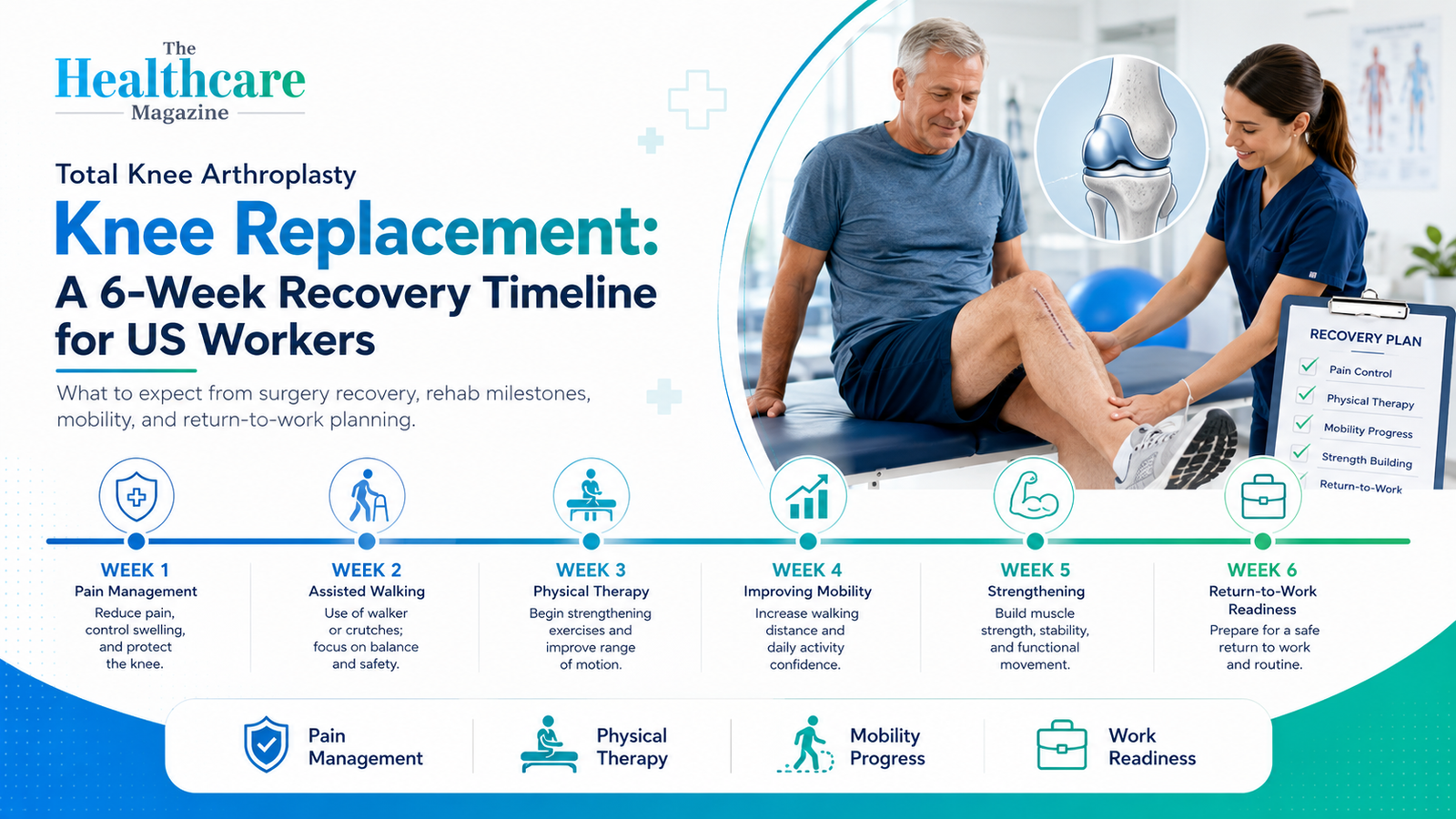
Here is a practical week-by-week look at what U.S. workers may experience during the first six weeks.
What Happens Immediately After Knee Replacement?
Recovery starts shortly after surgery. Physical therapists generally encourage patients to begin moving the new joint and walking with assistance as soon as medically appropriate. Early movement helps restore mobility and circulation while supporting the rehabilitation process.
At first, a walker or crutches may be necessary. Pain, stiffness, bruising, and swelling are expected during the early recovery period.
Before going home, patients typically receive instructions covering medication, wound care, physical therapy, safe movement, and warning signs that require medical attention.
Week 1: Focus on Pain Control and Safe Movement
The first week is usually the most demanding.
Your knee may be swollen and painful, and everyday activities such as getting out of bed, using the bathroom, getting dressed, or preparing food can require additional effort.
The main priorities during this stage are managing pain as advised, protecting the surgical wound, doing recommended exercises, and taking short walks.
Physical therapy is particularly important. Exercises are designed to improve circulation, strengthen the muscles supporting the knee, and gradually restore movement. AAOS notes that early exercises can include ankle pumps, quadriceps sets, and straight-leg raises, depending on the patient’s individual rehabilitation plan.
Can you work during Week 1?
For most people, this should be considered recovery time rather than working time.
Even employees who normally work from home may find it difficult to concentrate for long periods because of pain, medication, fatigue, and the need to exercise, elevate the leg, and move regularly.
Week 2: Building Independence
During the second week, some everyday tasks may begin to feel easier.
You will likely continue using a walker, crutches, or another assistive device according to your physical therapist’s recommendations. Swelling and discomfort may still be noticeable, especially after activity.
Physical therapy remains a central part of the schedule. The objective is not simply to walk farther. Patients also work on improving knee movement, strengthening the surrounding muscles, and developing a safer walking pattern.
AAOS notes that some patients can progress to a single crutch or cane at around two to three weeks when their strength and walking ability are sufficient. Individual progress can vary considerably.
Workers should avoid comparing their recovery with someone else’s. A colleague who returned to a desk quickly may have very different health, surgery, commute, and job requirements.
Week 3: Mobility Starts Improving
By the third week, many patients notice that moving around the home is becoming more manageable.
You may be walking for longer periods and relying less on your mobility aid. However, swelling can still increase after exercise or spending too much time on your feet.
This is where pacing becomes important. Feeling better does not necessarily mean the knee is fully healed.
If your employer offers remote work, flexible hours, or reduced responsibilities, you might begin discussing a gradual return. Whether that is appropriate should be decided with your surgeon or rehabilitation team.
Employees with physically demanding jobs will generally need considerably more recovery time.
Week 4: Returning to More Normal Activities
At four weeks, the difference from the first few days after surgery can be significant.
Walking, dressing, showering and moving around the house may require less assistance. Physical therapy continues to focus on strength, flexibility, balance and functional movement.
Some patients may also begin using an exercise bike during this stage. AAOS notes that resistance on an exercise bike can often be gradually increased around four to six weeks as strength improves, when approved as part of the rehabilitation program.
What about returning to an office job?
This is where return-to-work discussions become more realistic.
According to the American Association of Hip and Knee Surgeons (AAHKS), people with sedentary jobs such as computer-based work may be able to return in approximately four to six weeks. More demanding jobs involving significant walking, lifting, or travel can require substantially longer, potentially up to three months.
A phased return can sometimes make the transition easier, such as shorter workdays, remote work, fewer meetings, or additional opportunities to stand and move.
Week 5: Increasing Strength and Endurance
At five weeks, many people are becoming more independent, but the knee is still recovering.
You may be able to walk farther, complete more household activities, and spend longer periods away from home. Your physical therapist may gradually make exercises more challenging as your strength improves.
This is also a good time for workers to think about their actual workplace rather than simply whether they feel capable of working.
Consider the commute, stairs, parking distance, how long you normally sit, opportunities to elevate your legs, and whether your role involves lifting, kneeling, or prolonged standing.
Returning to work successfully means being able to manage the whole workday, not simply sitting at a desk for a few hours.
Week 6: A Major Recovery Checkpoint
Six weeks is an important milestone, but it should not be treated as the end of recovery.
Some patients may be walking without an assistive device by this point if they feel ready, while others still benefit from a cane or additional support.
Many patients also have a follow-up assessment around this stage. Your healthcare team can evaluate wound healing, mobility, strength, pain, swelling and overall progress.
For office employees, this may be an appropriate period to return or increase working hours. For nurses, warehouse employees, construction workers, retail workers and others whose jobs require extensive physical activity, six weeks may still be too early.
When Can You Drive After Total Knee Replacement?
Driving is particularly important for American workers who commute.
AAHKS states that many surgeons allow patients to resume driving around four to six weeks after surgery. However,h timing depends on factors such as which knee was replaced and individual recovery. Patients should not drive while taking narcotic pain medication and should discuss their readiness with their surgeon.
Being able to walk does not automatically mean you are ready to drive. You must be able to control the vehicle safely and react quickly in an emergency.
Desk Jobs vs. Physical Jobs
The phrase “return to work” can be misleading because jobs place very different demands on the knee.
A software developer working remotely has different requirements from a warehouse employee lifting packages throughout an eight-hour shift.
A general planning framework looks like this:
| Type of Work | Possible Return-to-Work Consideration |
| Remote/desk-based work | Often around 4–6 weeks |
| Office work with commuting | Often 4–6+ weeks |
| Jobs involving frequent standing/walking | May require additional recovery |
| Heavy lifting/manual labor | May require up to 3 months or individualized restrictions |
These are general ranges rather than deadlines. AAHKS specifically emphasizes that return to work depends on health, activity level, and job demands.
Don’t Ignore Warning Signs During Recovery
Some discomfort and swelling are expected, but certain symptoms require medical attention.
Contact your healthcare team if you develop concerning symptoms such as fever, increasing redness or swelling around the incision, drainage from the wound, or worsening pain. Blood clots are another important postoperative concern. New leg pain or swelling combined with chest pain or difficulty breathing requires emergency medical attention.
Follow the specific instructions provided by your surgeon rather than trying to push through unusual symptoms.
How Workers Can Prepare Before Surgery
A smoother return to work often starts before the operation.
Talk with your employer about expected medical leave and whether temporary remote or flexible work is possible. Arrange help at home for the early recovery period and prepare frequently used items so they are easy to reach.
It can also help to remove loose rugs and other tripping hazards and consider safety equipment such as bathroom handrails if recommended by your care team.
Most importantly, plan for flexibility. Recovery timelines are estimates, not promises.
The Bottom Line
The first six weeks after total knee arthroplasty are primarily about healing, restoring movement, and gradually rebuilding strength.
Many people with desk-based jobs may be able to return to work in about four to six weeks, while workers with physically demanding roles often need considerably longer. Full recovery itself can take several months.
The goal should not be to return to work as quickly as possible. It should be to return safely and sustainably, without putting unnecessary stress on the recovering knee.
Every knee replacement recovery is different. Your orthopedic surgeon and physical therapist should provide the final guidance on when you can drive, return to work, increase exercise, or resume physically demanding activities.