For decades, obesity care in the United States followed a familiar pattern: eat less, exercise more, and try to maintain the results.
For many people, that approach was not enough.
Obesity is now widely recognized as a complex chronic disease influenced by biology, genetics, metabolism, environment, behavior, medications, and other health conditions. At the same time, a newer generation of medications is changing how physicians and patients approach weight management.
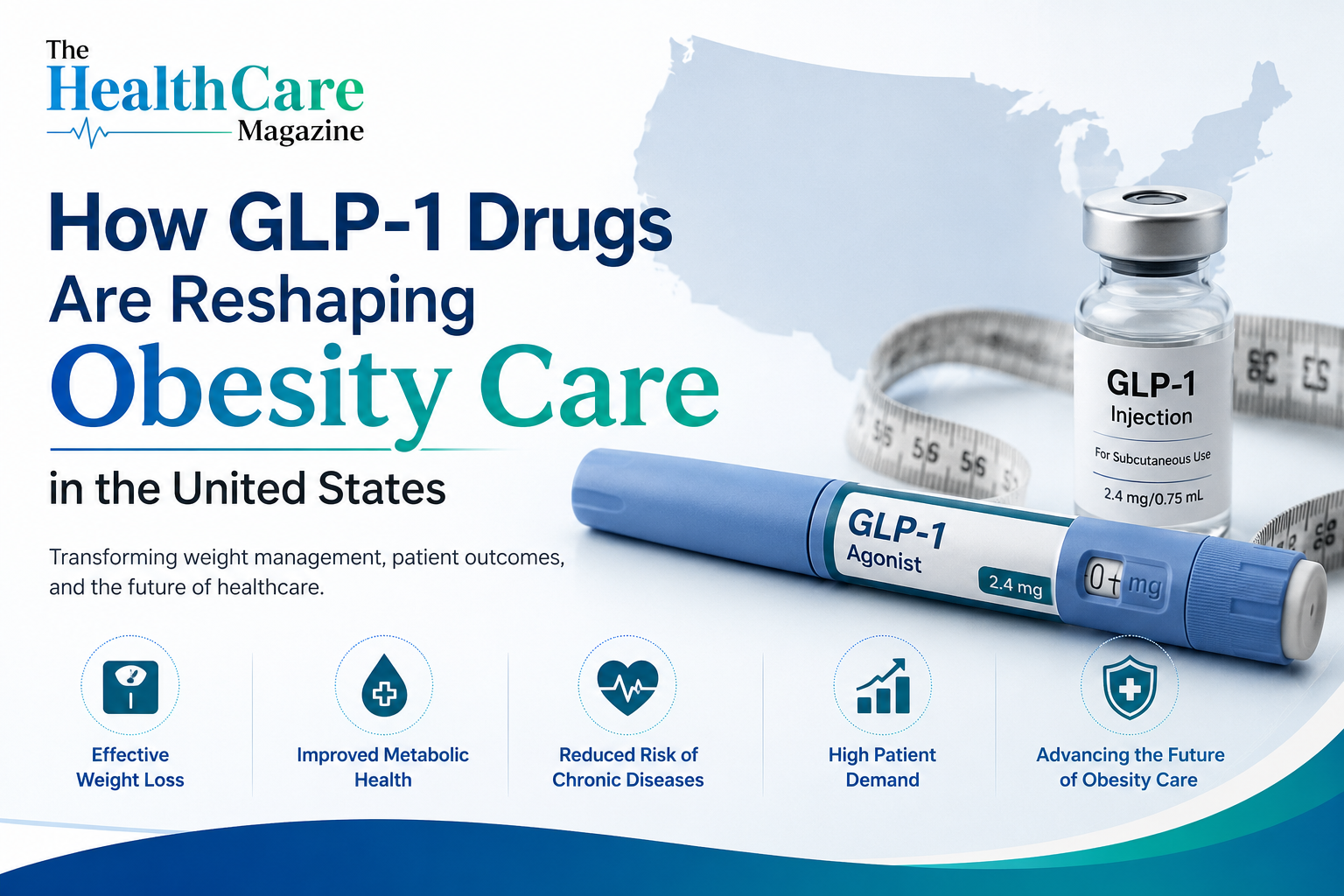
GLP-1-based drugs have quickly become one of the biggest developments in obesity treatment. Medications such as Wegovy and Zepbound are helping some patients achieve levels of weight loss that were previously difficult to reach without bariatric surgery.
But the impact goes beyond the number on the scale.
GLP-1 medications are changing conversations about obesity, expanding treatment options, creating new challenges for insurers, and pushing the U.S. healthcare system to reconsider how obesity should be managed over the long term.
Obesity Remains a Major U.S. Health Challenge
Obesity affects a significant share of the American population.
According to the latest measured data from the CDC’s National Center for Health Statistics, about 40.3% of U.S. adults age 20 and older had obesity during the August 2021–August 2023 period.
The issue also extends far beyond weight itself.
Obesity is associated with a higher risk of several chronic conditions, including type 2 diabetes, cardiovascular disease, high blood pressure, sleep apnea, joint problems, and certain cancers.
That is one reason the medical community has increasingly moved away from viewing obesity simply as a lifestyle problem.
The rise of GLP-1 medications is accelerating that shift.
What Are GLP-1 Drugs?
GLP-1 stands for glucagon-like peptide-1, a hormone naturally produced in the body.
Among other functions, GLP-1 helps regulate blood sugar and appetite. Medications that act on GLP-1 pathways can help people feel full sooner and remain satisfied for longer, which may reduce overall food intake.
Some of the most recognized drugs in this category include semaglutide and liraglutide.
Semaglutide is marketed under different brand names depending on its approved use. For example, Wegovy is approved for chronic weight management in certain patients, while Ozempic is primarily approved for type 2 diabetes.
Tirzepatide, sold as Zepbound for chronic weight management, is technically a dual GIP and GLP-1 receptor agonist rather than a GLP-1-only medication. However, it is commonly grouped into the broader conversation about GLP-1-based obesity treatments.
The FDA has approved several medications for long-term weight management, including liraglutide, semaglutide and tirzepatide.
These medications are generally intended to be used alongside nutrition, physical activity and other healthy lifestyle measures rather than replacing them.
Weight Loss Is Only Part of the Story
The attention surrounding GLP-1 drugs has largely focused on weight loss, but their potential health impact can be broader.
One major turning point came in March 2024.
The FDA approved Wegovy to reduce the risk of cardiovascular death, heart attack, and stroke in adults who have cardiovascular disease and either obesity or overweight.
That decision helped reinforce an important idea: obesity treatment can potentially influence serious health outcomes, not simply appearance or body weight.
Another milestone followed in December 2024, when the FDA approved Zepbound for moderate-to-severe obstructive sleep apnea in adults with obesity, alongside reduced-calorie nutrition and increased physical activity. It became the first medication approved specifically for certain patients with obstructive sleep apnea.
Developments like these are changing how healthcare professionals may think about weight management.
Instead of asking only, “How many pounds did the patient lose?” clinicians can increasingly consider questions such as:
Has cardiovascular risk improved?
Is blood pressure improving?
Is the patient’s sleep apnea becoming easier to manage?
Has mobility or quality of life improved?
That represents a meaningful change in obesity care.
Obesity Treatment Is Becoming More Personalized
GLP-1 medications are also contributing to a more individualized approach to weight management.
Not everyone with obesity needs the same treatment.
One patient may benefit from intensive nutrition and behavioral support. Another may need medication. Someone with severe obesity or significant complications may be a candidate for metabolic or bariatric surgery.
For some patients, a combination of approaches may be appropriate.
Prescription weight-management medications are generally considered for adults with a body mass index, or BMI, of 30 or higher, or a BMI of at least 27 when weight-related health problems are also present. Eligibility and treatment choice should ultimately be determined by a healthcare professional based on the patient’s overall health and medical history.
The arrival of highly effective medications gives clinicians another option to include in that conversation.
GLP-1 Treatment May Be Long Term
Another major change involves expectations.
Many Americans have been conditioned to think of weight loss as a temporary project: follow a program, lose the weight, and then stop treatment.
Obesity medicine increasingly looks different.
Research has shown that significant weight regain can occur after GLP-1 treatment is discontinued. In an extension of the STEP 1 semaglutide trial, participants regained approximately two-thirds of the weight they had previously lost within a year of stopping treatment.
That does not necessarily mean every patient will need the same medication indefinitely.
It does, however, reinforce the idea that obesity may need ongoing management in the same way physicians manage other chronic conditions.
This raises important questions for patients, physicians and insurers about long-term treatment plans, follow-up care, affordability and what happens when therapy is stopped.
Access and Insurance Remain Major Challenges
Perhaps the biggest limitation of the GLP-1 revolution is that having an effective medication does not automatically mean patients can access it.
Insurance coverage for obesity medications remains inconsistent across the United States.
According to KFF’s 2025 Employer Health Benefits Survey, only 19% of companies with 200 or more employees that offered health benefits reported covering GLP-1 medications when used primarily for weight loss. Coverage was more common among the largest employers.
Medicaid coverage also varies significantly by state. As of January 2026, KFF reported that 13 state Medicaid programs covered GLP-1 medications for obesity under fee-for-service programs.
Medicare policy is also evolving.
Beginning July 1, 2026, the Centers for Medicare & Medicaid Services launched the Medicare GLP-1 Bridge, a temporary demonstration designed to provide eligible Medicare Part D beneficiaries with access to certain GLP-1 medications for weight reduction and weight management. The program is currently scheduled to operate through December 31, 2027.
These developments could expand access, but affordability, eligibility requirements, and insurance rules will continue to shape who actually receives treatment.
GLP-1 Drugs Are Not Right for Everyone
The popularity of these medications can sometimes make them appear simple: take an injection, lose weight.
Real-world medical care is more complicated.
Common side effects can include nausea, vomiting, diarrhea, constipation and abdominal discomfort. Certain medications also have specific warnings and contraindications that physicians must consider before prescribing them.
Patients may also require gradual dose increases, nutritional guidance and ongoing monitoring.
That makes medical supervision important.
GLP-1 treatment should not be viewed as a cosmetic shortcut or a universal solution. It is one medical tool among several available for treating a complicated chronic condition.
The Conversation Around Obesity Is Changing
Perhaps one of the most significant effects of GLP-1 medications cannot be measured in prescriptions or pounds.
They are changing how Americans talk about obesity.
For years, people living with obesity have often faced the assumption that weight is primarily the result of motivation or willpower.
Modern obesity medicine paints a far more complicated picture.
The success of medications that influence appetite, satiety, and metabolic pathways highlights how strongly biology can affect body weight.
That shift could eventually help reduce some of the stigma surrounding obesity and encourage more patients to discuss weight-related concerns with healthcare professionals.
What Comes Next for Obesity Care?
GLP-1-based therapies are unlikely to be the final chapter in obesity medicine.
Drug developers are already exploring additional approaches to weight management, including treatments that target multiple hormonal pathways and potentially offer different dosing methods.
The larger challenge for the U.S. healthcare system will be determining how these treatments fit into routine care.
Healthcare organizations will need to answer difficult questions around insurance coverage, long-term medication use, patient selection, affordability and equitable access.
Physicians will also need to ensure that medication remains part of comprehensive obesity care rather than becoming the entire strategy.
Nutrition, physical activity, behavioral health, sleep, chronic disease management and ongoing medical support still matter.
A New Era of Obesity Treatment
GLP-1 drugs have not eliminated America’s obesity problem.
What they have done is change what may be medically possible for many patients.
Obesity care in the United States is gradually moving away from a model centered almost entirely on personal behavior toward one that treats obesity as the complex chronic disease it is.
The biggest transformation may therefore be bigger than the medications themselves.
GLP-1 therapies are helping move obesity care from a conversation about simply losing weight to one about managing health over the long term.
And that shift could reshape American healthcare for years to come.
Note: This article is for informational purposes only and should not be considered medical advice. Patients should discuss weight-management medications, potential benefits, risks, and treatment alternatives with a qualified healthcare professional.