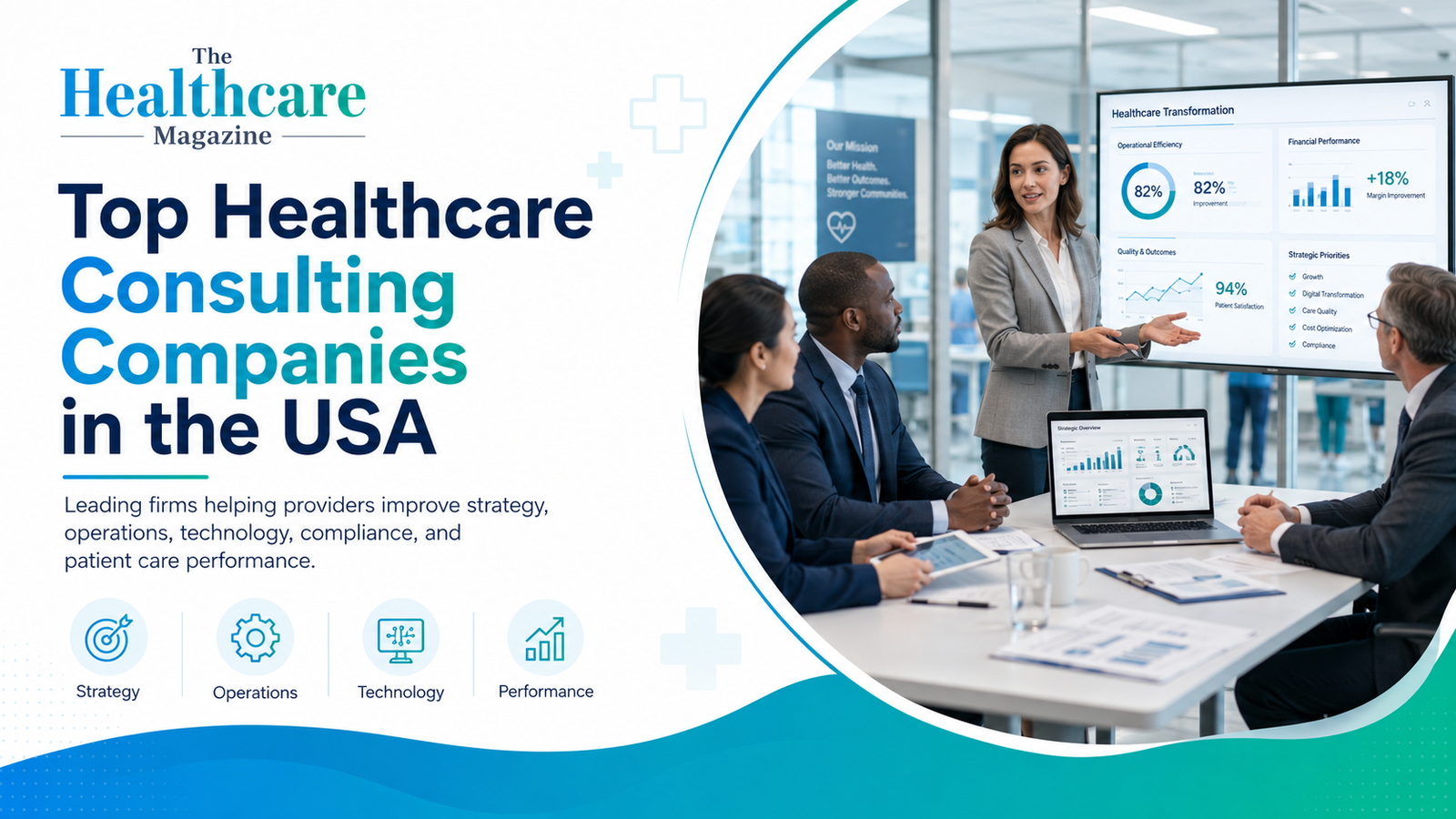
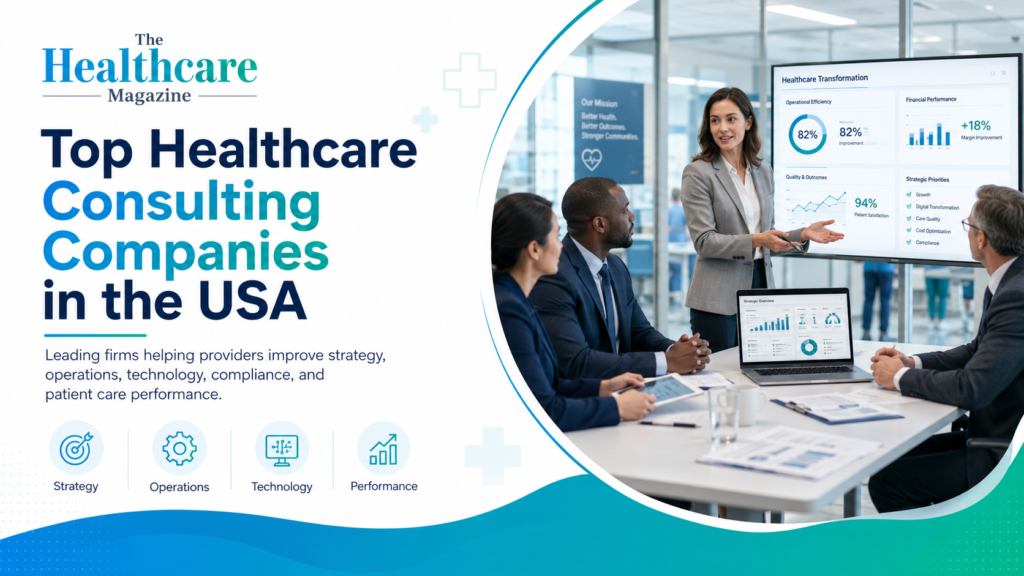
Healthcare organizations in the United States are dealing with a long list of challenges: rising operating costs, workforce shortages, changing reimbursement models, cybersecurity risks, regulatory requirements, new technologies, and growing expectations from patients.
Hospitals, health systems, physician groups, health plans, life sciences companies, and other healthcare organizations often bring in healthcare consulting companies when they need specialized knowledge or an outside perspective.
The right consulting firm can help an organization improve financial performance, redesign operations, introduce new technology, strengthen patient experiences, or develop a long-term growth strategy.
There is no single consulting company that is the “best” for every healthcare organization. Some firms are known for broad strategy work, while others specialize heavily in healthcare operations, financial performance, technology, or clinical transformation.
Below are 10 healthcare consulting companies with significant healthcare capabilities in the U.S. The list is not presented as a strict ranking.
1. McKinsey & Company
McKinsey & Company is a global management consulting firm with a substantial healthcare practice. Its work spans different parts of the healthcare ecosystem, including providers, payers, healthcare services, and technology organizations.
For healthcare services and technology companies, McKinsey describes capabilities ranging from strategic roadmaps and commercial growth to digital transformation, data, analytics, and technology implementation. Its teams include clinicians, data scientists, strategists, and technology specialists.
Best suited for: Large healthcare organizations looking for enterprise strategy, organizational transformation, growth planning, data initiatives, and technology transformation.
2. Deloitte
Deloitte combines healthcare consulting with capabilities in technology, analytics, operations, risk, and organizational transformation.
Its healthcare work focuses on areas such as connected healthcare data, secure and interoperable platforms, changing care-delivery models, consumer engagement, and digital transformation.
This broad range of capabilities can make Deloitte relevant to organizations that need support across several business functions rather than one healthcare issue.
Best suited for: Health systems, health plans, and other large organizations undertaking complex digital, operational, data, or enterprise transformation programs.
3. Chartis
Chartis stands out because of its dedicated focus on healthcare.
Its services cover strategic transformation, digital and technology transformation, performance improvement, payer transformation, healthcare AI, medical staff optimization, and strategic communications.
The firm says it serves approximately 1,900 organizations annually and has about 1,450 professionals dedicated to healthcare. Chartis has also received recognition from KLAS for healthcare consulting and IT services.
Best suited for: Healthcare providers and payers looking for a specialist firm with deep healthcare strategy, technology, clinical, financial, and operational experience.
4. Huron
Huron has a large healthcare consulting practice serving academic, national, regional, community, federal, and public health systems, as well as payers and other healthcare organizations.
Its healthcare services cover revenue cycle, operational improvement, clinical operations, patient experience, data and analytics, enterprise platforms, workforce strategy, supply chain, finance transformation, restructuring, M&A, and technology.
As of March 2026, Huron reported more than 3,800 dedicated healthcare employees, including over 110 clinicians, and said its teams had served more than 895 health systems, hospitals, and physician organizations.
Best suited for: Healthcare organizations that want hands-on help improving financial, operational, clinical, workforce, and technology performance.
5. Guidehouse
Guidehouse provides advisory, technology, and managed services across healthcare as well as other highly regulated sectors.
Its healthcare work addresses providers, payers, government health agencies, and life sciences organizations. The firm combines consulting with technology and managed-service capabilities, making it particularly relevant when an organization needs help moving from planning into implementation.
Best suited for: Organizations seeking a combination of healthcare advisory, technology implementation, managed services, and transformation support.
6. Kaufman Hall
Kaufman Hall has a particularly strong focus on the financial and strategic side of healthcare.
Its services include strategy and business transformation, financial planning and analytics, treasury and capital markets, mergers and acquisitions, clinical solutions, workforce consulting, and revenue and operations improvement.
The company says it has more than 700 professionals and has advised more than 3,000 healthcare organizations during its 40-year history.
That specialization can be valuable for hospitals and health systems facing questions around margins, capital allocation, growth, restructuring, partnerships, or acquisitions.
Best suited for: Hospitals and health systems focused on financial strategy, performance improvement, capital planning, M&A, and organizational growth.
7. ECG Management Consultants
ECG Management Consultants is another firm with a strong healthcare-specific focus.
Rather than serving dozens of unrelated industries, ECG concentrates on healthcare and offers consulting services for provider and payer organizations.
This type of specialization can be useful when an organization wants consultants who already understand healthcare economics, physician organizations, clinical operations, payer-provider relationships, and the operational realities of care delivery.
Best suited for: Health systems, hospitals, medical groups, academic organizations, and other healthcare providers looking for specialized management consulting.
8. Nordic
Nordic is particularly relevant for healthcare organizations looking for technology-focused consulting.
The company works with healthcare providers and payers on strategic advisory, digital and cloud initiatives, implementation, ERP services, enterprise technology transformation, EHR strategy, and clinical optimization. Nordic says more than 700 clients use its services.
Its combination of clinical and technical expertise can be useful for health systems that have already invested heavily in technology but need to improve workflows, adoption, interoperability, or the value generated from those systems.
Best suited for: Healthcare organizations undertaking EHR, ERP, cloud, digital health, clinical workflow, or enterprise technology projects.
9. ZS
ZS has spent more than four decades working across healthcare and is especially well known for its work with life sciences and healthcare companies.
Its healthcare capabilities span the entire ecosystem—from drug development and commercialization to payer operations, provider care, patient experience, and enterprise growth.
For pharmaceutical, biotech, and medtech organizations, the combination of healthcare knowledge, analytics, commercialization strategy, and technology capabilities can be particularly relevant.
Best suited for: Pharmaceutical, biotech, medtech, and other healthcare organizations focused on commercialization, analytics, customer engagement, technology, and growth.
10. Bain & Company
Bain & Company is a major global strategy consulting firm with experience across healthcare, including hospitals, insurers, medtech businesses, and other healthcare companies.
Its broader consulting capabilities can be useful when healthcare organizations are considering questions that extend beyond daily operations, such as corporate strategy, growth, organizational change, private equity, or major transformation.
Best suited for: Healthcare companies, investors, and large organizations looking for high-level strategy, growth, transformation, and investment-related consulting.
What Do Healthcare Consulting Companies Actually Do?
Healthcare consulting is a broad field. Two organizations looking for a consultant may need completely different types of support.
A hospital may need help reducing revenue-cycle problems, while a health plan may be looking to redesign its provider network. A pharmaceutical company could need commercialization support, while another health system may be preparing for an EHR implementation.
Healthcare consultants commonly work across areas such as:
- Corporate and growth strategy
- Hospital operations and performance improvement
- Revenue cycle management
- Digital health and technology
- EHR and ERP implementation
- Healthcare data and analytics
- Workforce planning
- Patient experience
- Mergers and acquisitions
- Financial planning
- Value-based care
- Cybersecurity and data governance
- Payer strategy
- Clinical operations
- Life sciences commercialization
Because the field is so broad, organizations should first define the problem they are trying to solve before comparing consulting firms.
How to Choose a Healthcare Consulting Company
A famous consulting brand is not automatically the right partner for every project.
Start by looking at the firm’s experience with organizations similar to yours. A 500-bed hospital, a regional health plan, a physician group, and a biotech startup will have very different requirements.
Industry specialization also matters. If the project involves clinical workflows or revenue cycle improvement, direct healthcare experience may carry more weight than general management consulting experience. For a large corporate transformation or market-entry strategy, a broader strategy firm may make more sense.
Organizations should also evaluate the proposed consulting team, implementation capabilities, technology expertise, measurable past outcomes, project timeline, communication model, and total cost.
Most importantly, ask what happens after the strategy is delivered. A good recommendation only creates value when the organization can put it into practice.
The Role of Healthcare Consultants Is Changing
Healthcare consulting is moving beyond traditional strategy presentations.
Healthcare organizations increasingly need partners that can connect strategy with technology, data, operations, workforce planning, and implementation. Leading firms such as Chartis, Huron, Nordic, Guidehouse, McKinsey, and others are increasingly expanding their services beyond traditional consulting to include digital transformation, advanced analytics, automation, and emerging technologies.
At the same time, healthcare leaders still need to consider the fundamentals: affordability, access, clinical quality, workforce sustainability, financial stability, and patient experience.
That means the strongest consulting relationship is usually not about adopting the newest technology. It is about identifying the organization’s real problem and choosing the right combination of people, processes, data, and technology to address it.
Final Thoughts
The U.S. healthcare consulting market includes everything from global strategy firms to companies dedicated almost entirely to healthcare.
McKinsey, Deloitte, Bain, and Guidehouse offer broad consulting capabilities, while Chartis, ECG, Kaufman Hall, Huron, and Nordic bring particularly strong healthcare-focused expertise in different areas. ZS is especially notable for its depth across healthcare and life sciences.
Rather than choosing a firm based only on size or reputation, healthcare leaders should match the consultant’s expertise to the specific challenge they need to solve.
For hospitals, clinics, health systems, payers, life sciences companies, and healthcare technology organizations, the right consulting partner can provide an outside perspective, specialized knowledge, and practical support for making complex changes.