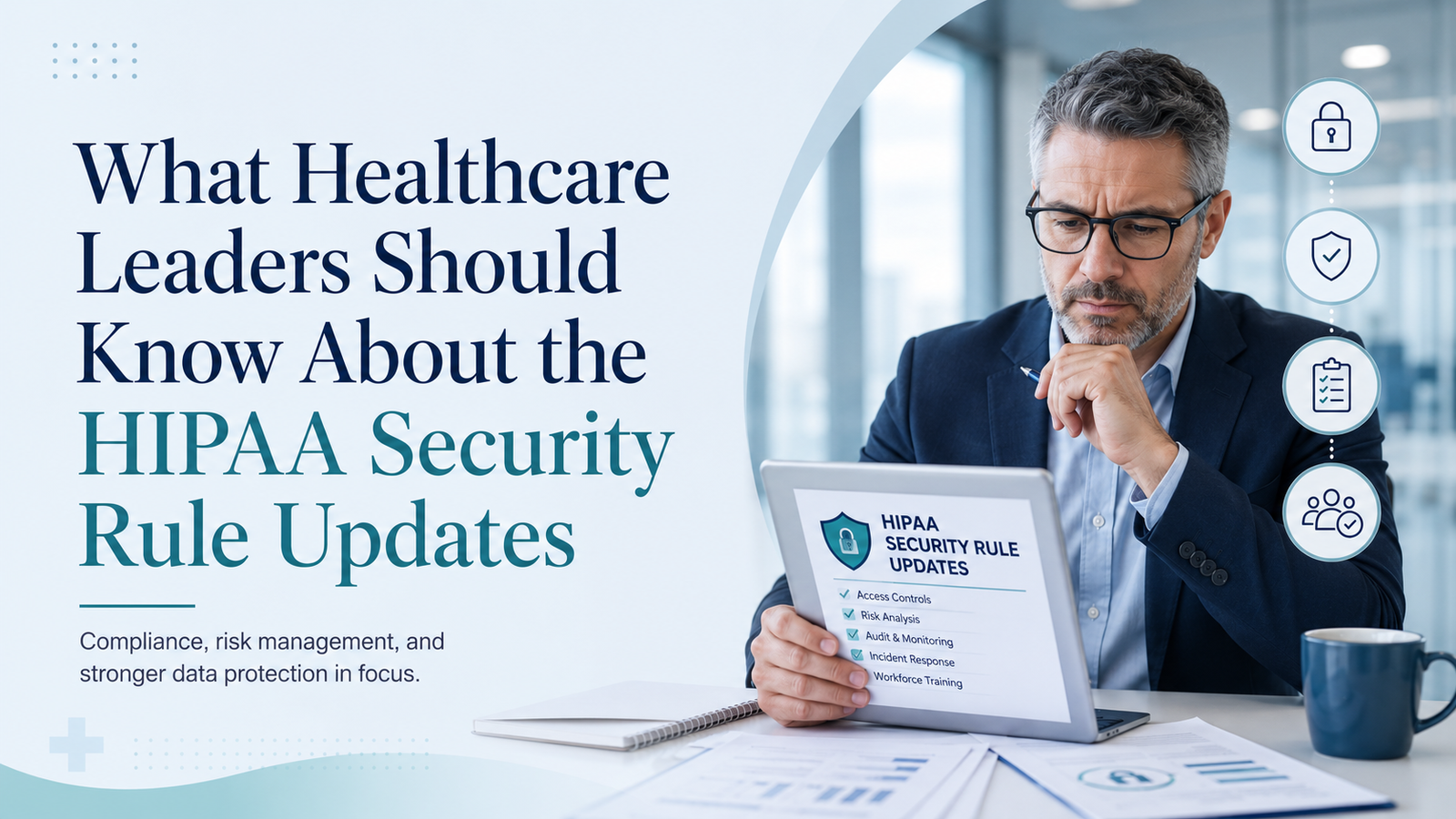
Healthcare leaders in the United States are paying closer attention to cybersecurity, privacy, and patient data protection. One major reason is the proposed update to the HIPAA Security Rule.
The HIPAA Security Rule is not new. It has been part of healthcare compliance for years. The main goal is to protect patients’ health information when it is stored, shared, or used electronically. This includes patient data that is created, received, stored, or shared in electronic form.
But healthcare has changed a lot since the rule was first developed. Hospitals, clinics, health plans, labs, pharmacies, and business partners now rely on digital systems every day. Cyberattacks have also become more serious. The proposed updates are meant to help healthcare organizations follow more consistent cybersecurity practices.
For healthcare leaders, this is not just a legal topic. It is a business, technology, and patient trust issue.
Why the HIPAA Security Rule Matters
The HIPAA Security Rule requires covered entities and business associates to protect ePHI. Covered entities include many healthcare providers, health plans, and healthcare clearinghouses. Business associates include vendors and partners that handle protected health information on behalf of these organizations.
The rule focuses on three main goals: confidentiality, integrity, and availability.
Confidentiality means only authorized people should be able to access patient information. Integrity means the information should remain accurate and not be changed without permission. Availability means the information should be accessible when needed for care and operations.
These three goals are important because patient care depends on reliable data. If patient records are exposed, changed, locked, or unavailable, the impact can be serious.
Why Updates Are Being Proposed
Healthcare organizations face more digital risk than before. Electronic health records, patient portals, remote work, cloud platforms, connected devices, and third-party vendors have made healthcare systems more complex.
At the same time, cybercriminals see healthcare as a valuable target. Patient records contain personal, medical, insurance, and financial information. This makes healthcare data attractive to attackers.
The updates would give healthcare organizations clearer steps for protecting patient data. They also push organizations to move from basic compliance to stronger risk management.
For leaders, this means cybersecurity can no longer be treated as only an IT department task. It needs support from executives, compliance teams, clinical leaders, legal teams, and operations.
Stronger Risk Analysis Expectations
Risk analysis has always been a key part of the HIPAA Security Rule. The proposed updates require healthcare organizations to have a clear and complete written risk analysis.
A risk analysis helps an organization understand where ePHI is stored, who can access it, how it moves, and what could go wrong. It also helps leaders decide which risks need the most attention.
This should not be a one-time checklist. Healthcare organizations need to review risks regularly, especially when they add new systems, change vendors, update workflows, or experience a security incident.
A strong risk analysis gives leaders a better view of their weak points. It also helps them plan budgets, assign responsibility, and reduce avoidable risk.
More Focus on Technology Asset Inventory
One important proposed update is the need for a detailed inventory of technology assets and a map of how ePHI moves through systems.
This is important because many organizations do not fully know which systems, devices, software, and tools have access to patient data.
For example, ePHI may be stored in an electronic health record, billing system, patient portal, cloud storage platform, lab system, email system, or vendor platform. If leaders do not know where patient data is located, they cannot fully protect it.
An asset inventory helps organizations answer simple but important questions. What systems do we use? Which ones contain patient data? Who owns each system? Which vendors have access? Are old tools still connected to the network?
This visibility is essential for better security.
Access Control Will Become More Important
Access control means making sure the right people can access the right information at the right time.
Healthcare organizations often have many user roles. Doctors, nurses, billing teams, administrators, contractors, and vendors may all need different levels of access. Without proper controls, too many people may have access to sensitive data.
The proposed updates encourage stronger safeguards around access. This may include better user authentication, role-based access, stronger password practices, and multi-factor authentication.
Multi-factor authentication adds another layer of protection. Instead of relying only on a password, users must confirm their identity in another way. This could be through a mobile app, code, token, or other approved method.
Encryption and Data Protection
Encryption helps protect data by making it unreadable to unauthorized users. If data is stolen but properly encrypted, it is much harder for attackers to use.
The proposed updates place more attention on protecting ePHI both when it is stored and when it is transmitted. This matters because patient information often moves between systems, providers, vendors, and health plans.
Healthcare leaders should review where encryption is already used and where gaps may exist. They should also confirm whether vendors apply strong encryption when handling patient data.
Encryption is not the only security control needed, but it is an important layer of protection.
Business Associates Need Closer Oversight
Many healthcare organizations depend on outside vendors. These may include billing companies, IT providers, cloud platforms, software vendors, consultants, and data services.
If these vendors handle ePHI, they can create compliance and security risks. A weak vendor can become an entry point for a larger security incident.
The proposed updates make vendor oversight more important. Healthcare leaders should review business associate agreements, security expectations, incident reporting responsibilities, and vendor risk assessments.
The main question is simple: if a vendor has access to patient data, how do we know they are protecting it properly?
Vendor relationships should be managed actively, not only when a contract is signed.
Incident Response and Recovery Planning
Even strong organizations can face cyber incidents. That is why response and recovery planning matters.
Healthcare leaders should know what happens if systems go down, patient data is exposed, or a vendor reports a breach. Teams need clear roles, communication steps, backup plans, and recovery processes.
A good incident response plan should explain who leads the response, who contacts legal and compliance teams, how patients are informed, and how operations continue during downtime.
Recovery planning is also important. Healthcare organizations need secure backups, tested recovery processes, and realistic downtime procedures.
Training Should Be Practical
HIPAA training should not be limited to long documents or once-a-year sessions. Staff need practical guidance they can apply during daily work.
Employees should understand how to protect logins, identify suspicious emails, report incidents, handle patient data, and avoid unsafe sharing practices.
Training should be simple, regular, and role-specific. A nurse, a billing specialist, an IT employee, and an executive may all need different types of guidance.
Leaders should build a culture where security is part of daily work, not a separate compliance task.
What Leaders Should Do Now
Healthcare leaders should not wait until the requirement is final before preparing. Many proposed changes reflect strong cybersecurity practices that organizations should already be considering.
Leaders can begin by reviewing current risk analysis, updating asset inventories, checking vendor agreements, improving access controls, strengthening incident response plans, and reviewing staff training.
They should also involve the right teams early. Compliance, IT, legal, finance, operations, and clinical leadership all have a role.
The best approach is to prepare in stages. This makes the work more manageable and reduces last-minute pressure.
Conclusion
The HIPAA Security Rule updates show that healthcare data protection is becoming more detailed, more technical, and more connected to patient trust.
For healthcare leaders, the message is clear. Protecting ePHI is not only about meeting a regulation. It is about protecting patients, supporting care teams, and keeping healthcare operations running smoothly.
Healthcare organizations that prepare early will be ready to meet future requirements. More importantly, they will be better prepared to protect the people who depend on them.