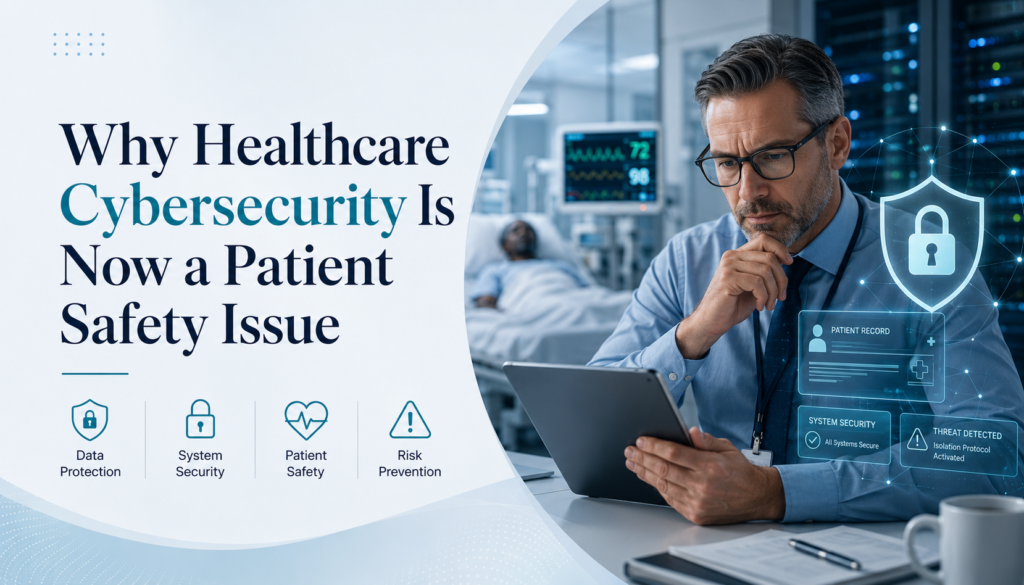
Healthcare cybersecurity is no longer only an IT problem. It is now a patient safety issue.
Hospitals, clinics, pharmacies, laboratories, and health systems depend on digital tools every day. Patient records, test results, prescriptions, billing systems, medical devices, appointment platforms, and communication tools are all connected in some way.
When these systems work well, care becomes faster and more organized. But when they are attacked or shut down, patient care can be delayed, disrupted, or put at risk.
For healthcare organizations in the United States, cybersecurity is now part of protecting patients.
Healthcare Depends on Digital Systems
Most healthcare work now depends on technology. Doctors use electronic health records to check patient history. Nurses update medication details. Labs send test results through digital systems. Pharmacies receive prescriptions electronically. Hospitals use connected devices to monitor patients.
This means a cyberattack can affect more than files and passwords.
If a system goes down, staff may not be able to access patient records. A provider may not see allergy information. A nurse may not get a medication update on time. A lab result may be delayed. A scheduled surgery may need to be postponed.
These are not small technical problems. They can affect real people waiting for care.
Cyberattacks Can Delay Treatment
One of the biggest risks of a healthcare cyberattack is delay.
When digital systems stop working, clinical teams often have to switch to manual processes. They may use paper forms, phone calls, handwritten notes, or temporary workflows. These methods can help during an emergency, but they are slower and more difficult to manage.
A delay in care can be serious for patients who need urgent treatment. Emergency departments, cancer centers, intensive care units, and surgical teams all depend on fast access to accurate information.
Even a short delay can create stress for patients and staff. Healthcare cybersecurity matters because safe care depends on timely information.
Patient Records Must Be Protected
Healthcare data is very sensitive. It may include medical history, diagnoses, medications, test results, insurance details, Social Security numbers, addresses, and payment information.
If this data is stolen, patients may face financial harm, identity theft, privacy issues, or emotional distress. But the risk is not only about privacy.
If patient data is changed, deleted, locked, or made unavailable, care teams may not have the correct information when they need it.
For example, missing medication history can lead to confusion. If allergy information is missing, patients may face serious safety risks. Incomplete records can make diagnosis and treatment harder.
Protecting patient records is part of protecting patient care.
Ransomware Can Shut Down Care Operations
Ransomware is one of the most serious threats to healthcare organizations. In a ransomware attack, criminals lock systems or data and demand payment to restore access.
For a hospital or clinic, this can affect daily operations. Appointment systems may stop working. Patient portals may go offline. Billing systems may become unavailable. Staff may lose access to electronic health records.
In some cases, healthcare organizations may need to cancel procedures, move patients, or redirect emergency care.
This shows why cybersecurity planning must include clinical operations. It is not enough to protect computers. Organizations must also prepare for how care will continue if systems are unavailable.
Connected Medical Devices Add New Risk
Healthcare organizations also use many connected medical devices. These may include patient monitors, infusion pumps, imaging systems, wearable devices, and remote monitoring tools.
These devices can improve care, but they can create new cybersecurity risks if they are not properly protected.
A connected device may collect data, send alerts, or support treatment. If it is not secure, it could become a weak point in the system.
This does not mean healthcare should avoid connected devices. It means organizations must manage them carefully. Devices should be updated, monitored, and protected like other important systems.
Staff Training Is Essential
Cybersecurity is not only the job of the IT department. Everyone in a healthcare organization plays a role.
Many attacks begin with simple actions, such as clicking a dangerous link, opening a fake email, using a weak password, or sharing login details by mistake.
Healthcare staff are already busy. They may receive many emails and work under pressure. This can make them more vulnerable to mistakes.
Training should be simple, regular, and practical. Staff should know how to spot suspicious emails, report problems quickly, and protect patient information.
Cybersecurity Should Be Part of Patient Safety Planning
Healthcare organizations already have patient safety plans. They plan for infection control, medication safety, emergency response, and quality improvement.
Cybersecurity should be part of the same thinking.
Leaders should ask important questions. What happens if our electronic health record goes offline? How will staff access critical patient information? How will we communicate with patients? How will we keep emergency care running? How quickly can we recover systems?
These questions help organizations prepare before a crisis happens. A strong cybersecurity plan should include prevention, response, recovery, and communication.
Patients Need Clear Communication During Cyber Events
When a cyber incident happens, patients may feel confused and worried. They may not know if their data is safe. They may not know if their appointment is still happening. They may not understand why care is delayed.
Healthcare organizations should clearly explain what happened, which services are affected, what steps they are taking, and what patients should do next.
Patients do not need technical language. They need honest and simple updates.
Leadership Must Treat Cybersecurity as a Care Priority
Healthcare leaders can no longer treat cybersecurity as a background function. It should be discussed at the leadership level because it affects safety, operations, reputation, compliance, and patient trust.
Cybersecurity investment should not be seen only as a cost. It is part of keeping the organization safe and reliable.
Leaders should support stronger systems, better staff training, updated devices, secure backups, and regular risk reviews. They should also make sure clinical teams are included in planning.
Conclusion
Healthcare cybersecurity is now a patient safety issue because patient care depends on digital systems. When those systems are attacked, delayed, or unavailable, patients can be affected directly.
Cybersecurity protects more than data. It protects access to care, accurate records, connected devices, staff workflows, and patient trust.
For healthcare organizations in the United States, the message is clear. Strong cybersecurity is not optional. It is part of safe, modern healthcare.
Patients deserve care that is not only skilled and compassionate, but also secure.