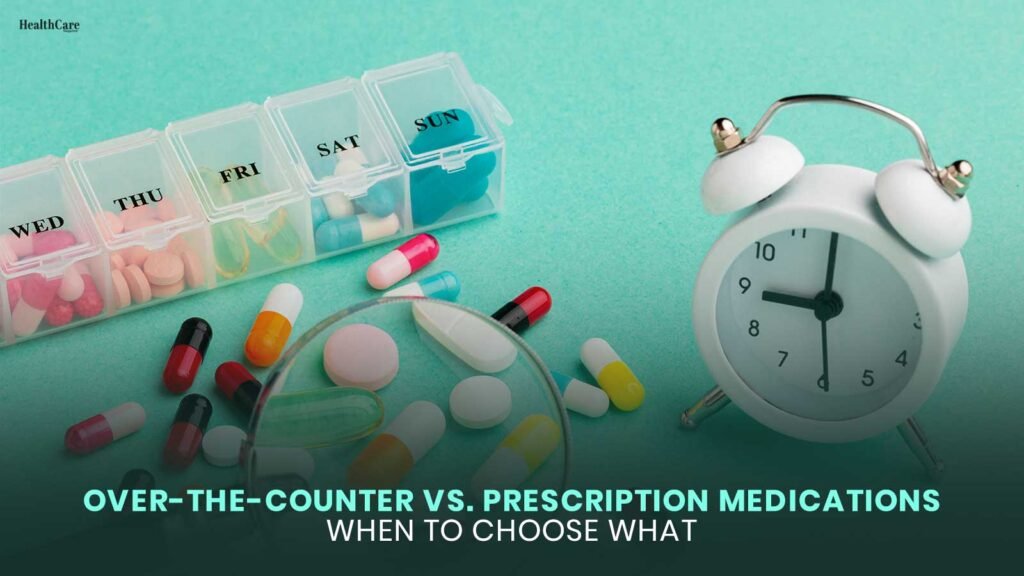
In the world of healthcare, medication plays a pivotal role in maintaining and restoring health. Medications come in various forms, with over-the-counter (OTC) and prescription drugs being two primary categories. Understanding when to choose one over the other is vital for your well-being. In this article, we will delve into the differences between OTC and prescription medications, helping you make informed decisions about your healthcare.
What Are Over-the-Counter Medications?
Over-the-counter medications, often abbreviated as OTC, are drugs that are available without a prescription. These drugs are typically found on pharmacy shelves and can be purchased by consumers directly. They are considered safe and effective when used as directed.
When to Choose OTC Medications:
- Minor Ailments: OTC medications are suitable for treating common, self-diagnosable conditions such as headaches, allergies, or mild cold symptoms.
- Short-Term Relief: If you need temporary relief from a minor ailment, OTC drugs can provide quick and easy solutions.
- Low-Risk Conditions: OTC drugs are generally safe for individuals without underlying health concerns or allergies.
What Are Prescription Medications?
Prescription medications, on the other hand, are drugs that require a written order (prescription) from a licensed healthcare provider, such as a doctor or nurse practitioner. These drugs are typically more potent or have a higher risk of side effects and therefore require professional oversight.
When to Choose Prescription Medications:
- Complex or Chronic Conditions: If you have a chronic illness like diabetes, hypertension, or a severe infection, prescription medications may be necessary to manage these conditions effectively.
- Stronger Medications: Prescription drugs are often more potent and are reserved for conditions that require precise dosing and monitoring.
- Risk Factors: If you have underlying health issues, allergies, or are taking other medications, a healthcare provider can assess potential interactions and prescribe the safest treatment.
- Treatment Supervision: Some medications, such as antibiotics, require precise treatment courses to avoid drug resistance. A prescription ensures proper usage.